The Cursed Poet
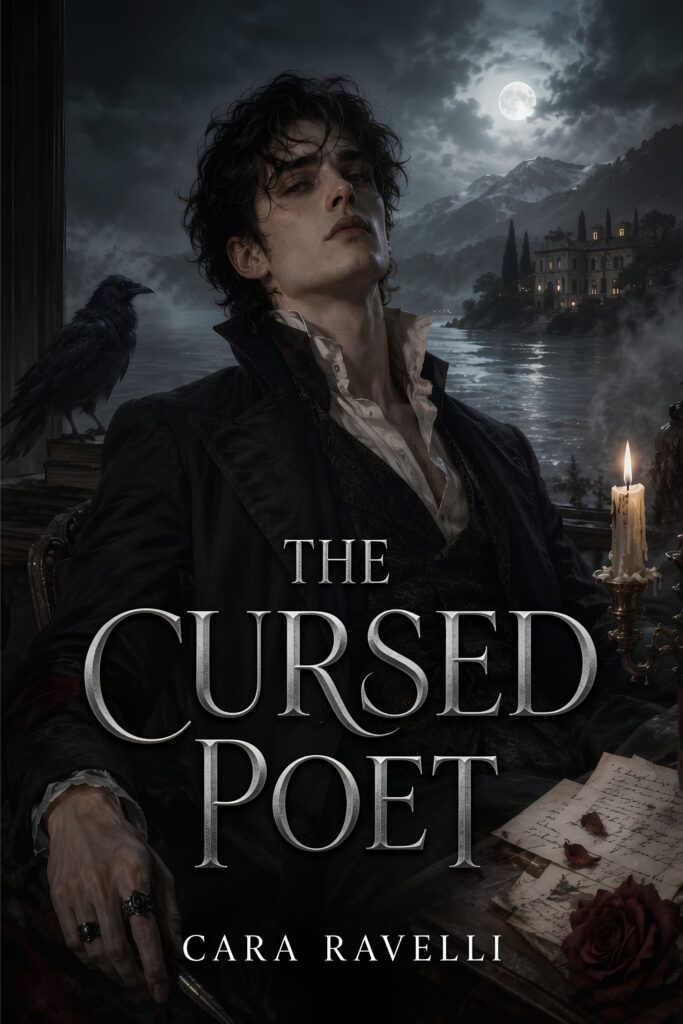
The Cursed Poet
A haunted house. A cursed poet.
A girl who refuses to play by the rules.
THIS YEAR, LOVE IS THE DEADLIEST MAGIC OF ALL.
Every year, thirteen black-sealed invitations slip through Geneva’s shadows, summoning strangers, lovers, and liars to the legendary Villa Diodati. The rules? Thirteen guests. Thirteen stories. Every tale must be true or the Villa takes a piece of your soul as payment.
But this isn’t some bougie masquerade with overpriced wine and moody lighting. The masked host is none other than George Byron himself. Yes, thatByron: poet, scandal-magnet, and, thanks to a two-hundred-year-old curse, the Villa’s immortal master of ceremonies. For centuries, he’s seduced and discarded, desired without memory, lusted without love. Just the way the curse likes it.
Until Mira Hartley stumbles into the garden—tipsy, reckless, and absolutely unimpressed by dead poets with god complexes. She doesn’t flinch. She doesn’t swoon. She laughs in Byron’s face. And when he kisses her, it’s not temptation—it’s a warning. Because for the first time in centuries, Byron feels something he shouldn’t: hope.
Coming October 15. The archive is opening.
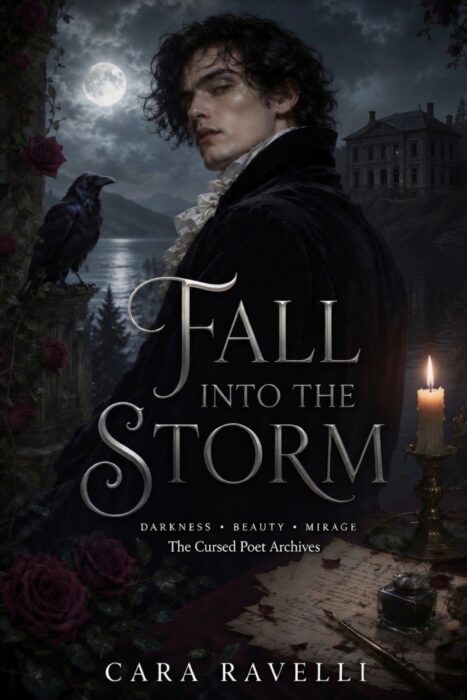
Fall Into The Storm
The story ended. The archive remained.
Step beyond the pages of The Cursed Poet — into the letters he never sent, the confessions written by candlelight, and the poems that survived two centuries of the curse.
✦ Byron's private letters, unsealed
✦ Deleted scenes too dark
✦ The real poetry of 1816, and the cursed verses that came after
✦ How Byron found me: the true story behind the saga
Coming October 15. The archive is opening.
How Byron Found Me
I had a dream, which was not all a dream. — Lord Byron
You think you know Byron. I thought I did too.
Until Halloween night, 2017.
I was living in Nernier, a small medieval village on the French side of Lake Geneva — the kind of place that already feels like it remembers more than it says. That evening, the weather was strange. Not stormy, exactly. Not calm either. The air had that charged feeling before something breaks.
The children had already gone home with their candy. My son was asleep, my husband too. And I felt I had to walk. So I took Max, my little French bulldog, and went down to the lake.
I wasn't trying to write Byron. I had rented an apartment tied to the old property near the house where Mary Shelley was said to have written pages of Frankenstein. I would imagine her there on stormy nights — young, brilliant, haunted by something she had not yet fully named — and I thought: if Mary Shelley could find a story here, why not me?
Then, by the lake, in the fog, I saw him. Not Byron. Percy. The vision was so real I heard his voice clearly: Come and find us. Us? I thought. Mary and Percy? And I laughed at my little Halloween ghost.
Until I reached the stone.
I had seen it before. I had read the words on it a hundred times. But that night, when I arrived, the storm came closer. Thunder followed thunder, rolling over the lake like something waking up.
And then I saw him. A man in a long coat. Byron. His hair and clothes flying in the wind, as if the storm had taken hold of him and refused to let go. He was not standing like a ghost. He was standing like someone waiting.
That night, I went home and read everything I could find — about Byron, about Percy, the stories, the legends, the strange little details history refuses to let die — and all I could think was: no, this cannot be real. People do not live like this, and they do not die like this.
Unless it was never only history.
Unless it was a curse.
That night, I imagined the man beneath the name Byron. And that night, he found me again in my dreams.
He has not left since.
So I gave him a story.
Cara